In a - manner
2026/09/25
〜 の方法で、 ~ の様子で
やり方や状態・様子を描写する際に重宝するのが、
“ in a – manner “。
ダッシュ部には、 形容詞を入れる。
形容詞を入れ替えれば、 大半の状況が説明できる。
堅めの文書で用いられる表現 である。
日常口語では、” in a – way ” の方が、 一般的な印象。
【発音】 wéi
【音節】 way (1音節)
ダッシュ部には、 同じく形容詞を入れる。
または、 副詞( adverb )1語で表すことが多い。
–
【例】
- The scenario has changed in a drastic manner.
- The scenario has changed in a drastic way.
- The scenario has changed drastically. ※ 副詞
–
( そのシナリオは、思い切り変更されている。)
–
この3文は同義。
つまり、” in a – manner ” と ” in a – way ” は、
それぞれ 「 3語ワンセット 」 で副詞の役割
を果たすということ。
” manner ” の筆頭の語釈は、” way ” と同義扱い。
–
–
mannerformal
1. the way in which something is done or happens.( ロングマン、LDOCE6 )
※ 下線は引用者
【発音】 mǽnər
【音節】 man-ner (2音節)
–
◆ 普段使いにおける、上記3つの頻出度をざっと比較すると、
副詞1語 > way > manner
–
あくまで、 私の経験に基づく感触である。
とはいえ、 煩雑な言い回しは世間一般に好まれないため、
大方外れてはいないと考える。
いずれにせよ、 大概、 この3パターンに換言できる。
後述の例文も、各3文を示す。
–
◆ 3つのうち、 頻出度が最低なのに、 なぜ取り上げるか。
繰り返しになるが、堅めの文書で起用されるからである。
公的文書や事件・事故関連の記事には、普通に出てくる。
中級 の英語学習者であれば、” in a – way ” と基本的な
副詞は学習済みであろう。
一方、” in a – manner ” は、それほど身近でない。
かっちりした表現のため、ハードル高めであるが、
フォーマル文書には似つかわしい。
使用場面は限られるものの、それなりに重宝されている。
今回学んでおけば、後日出てきた時に、すんなり認識できるだろう。
–
◆ ” manner ” は 「 マナー 」。
【発音】 mǽnər
【音節】 man-ner (2音節)
語源は、ラテン語 「 手の 」( manuārius )。
「 マニュアル 」( manual ) と同源。
「 マンネリ 」 は 「 マンネリズム 」 で、
” manner ” + ” ism ” = ” mannerism ”
【発音】 mǽnərìzm
【音節】 man-ner-ism (3音節)
” ism ” は、「 状態 」 「 主義 」 を意味する
「 抽象名詞 」( abstract noun ) を作る接尾辞( suffix )。
「 マンネリズム 」 の他にも、 名詞 ” mannerism ” は、
「 特徴 」 「 癖 」 の意味がある。
- ” The actor playing Jess captured Olivia’s
vocal mannerisms perfectly. ”
( ジェスを演じた俳優は、オリヴィアの声の癖を完璧に捉えた。)
■ まとめると、 ” manner ” は、
- 名詞のみ
- 可算名詞と不可算名詞を兼ねる
- 原則は可算名詞で、不定冠詞 ” a ” がつく
以上の3つの特徴は、名詞 ” way ” と共通。
” manner ” は名詞のみにも関わらず、 非常に多義である。
カタカナ 「 マナー 」 の 「 行儀・作法・身だしなみ 」 に加えて、
「 方法 」 「 様子 」 「 態度 」 「 流儀 」 が主な意味。
米海軍の制服規定 には、 ” Manner for Wear ” という表現で、
男女別の各制服の着用方法が細かく明文化されている ( 写真入り )。
一般社会では、 ” manner of dress ” で服装全般を指す。
–
–
Cause of death: Acute intoxication
Manner of death: Suicide
–
死因: 急性中毒
死亡方法: 自殺
- ” The official cause and manner of death are still pending.”
( 正式な死因と死亡の方法はまだ確定していない。)
– - ” The manner of death was natural.”
( 自然死だった。)
–
< Manner of death (MOD) classification >- natural 自然死
- accident 事故死
- suicide 自殺
- homicide 他殺
- undetermined 不審死
–
What is the Difference Between Cause of Death and Manner of Death?The cause of death is the specific injury or disease that leads to death.
The manner of death is the determination of how the injury or disease leads to death.
There are five manners of death (natural, accident, suicide, homicide, and undetermined).
–
–
【 参考和訳 】死因と死亡方法の違い
死因とは、 死に至らせた具体的な傷害または疾病を指す。
死亡方法とは、その傷害または疾病によって、
どのように死に至ったかを判断するものである。
5種類 ( 自然死、事故死、自殺、他殺、不審死 ) に分類される。–
https://www.washoecounty.gov/coroner/faq/difference_cause_and_manner_of_death.php※ 2026年1月 アクセス
–
【参考】 ※ 外部サイト
- Robert Carradine ’s Manner of Death Confirmed
( ロバート・キャラダイン の死因が判明 ) ※ 米俳優 ( 1954-2026 )
https://people.com/robert-carradine-manner-of-death-confirmed-medical-examiner-11916572
2026年2月27日付
◆ ” in a – manner ” が、 ” in a – way ” とほぼ同義であることから
分かるように、 この用法の ” manner ” は可算名詞 ( countable noun )。
青字で示す。
状態の前置詞 ” in “( ~ の状態で )と 不定冠詞 ” a ” で、
” in a – manner “。
直訳は、 次の左辺。
-
~ の方法の 状態 で → ~ の 方法 で
-
~ の様子の 状態 で → ~ の 様子 で
-
~ の態度の 状態 で → ~ の 態度 で
-
~ の流儀の 状態 で → ~ の 流儀 で
「 ~ の状態 」 ではくどいので、 ” in ” の和訳を一部省略したのが右辺 。
※ 同じ用法の ” in ” とその省略例
- in a bad mood
( 不機嫌 な状態 で ) → ( 不機嫌で )
– - in a bad health
( 不健康 な状態 で ) → ( 不健康で )
–
◆ ” manner “、” way “、そして青字部分。
単語自体は、どれも漠としている感じ。
ダッシュ部に形容詞を挿入することで、ようやく情景が浮かび上がる。
これから、3パターンずつ見ていこう。
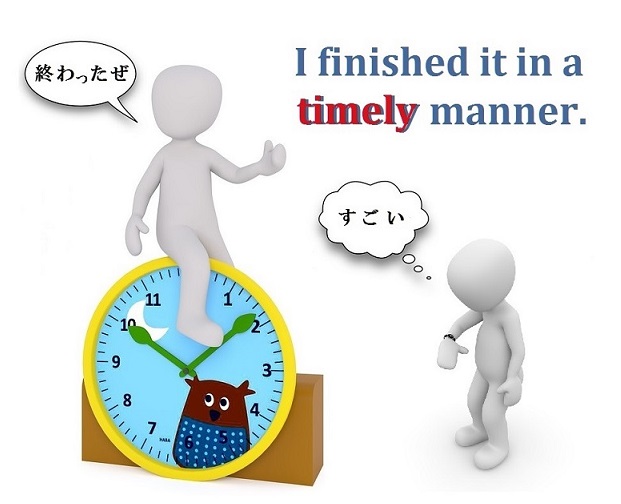
タイムリー
–
- ” She was let go in a civil manner.”
” She was let go in a civil way.”
” She was let go civilly.”
( 彼女は丁重に解雇された。)
– - ” They spoke in a rude manner.”
” They spoke in a rude way.”
” They spoke rudely.”
( 彼らは無礼な物言いをした。)
– - ” He reacted in a positive manner.”
” He reacted in a positive way.”
” He reacted positively.”
( 彼は好意的な反応を示した。)
– - ” She responded in a negative manner.”
” She responded in a negative way.”
” She responded negatively.”
( 彼女は否定的な態度で応じた。)
– - ” I asked him in a calm manner.”
” I asked him in a calm way.”
” I asked him calmly.”
( 私は落ち着いて彼に尋ねた。)
– - ” He asked me in a demanding manner.”
” He asked me in a demanding way.”
” He asked me demandingly.”
( 彼はきつい口調で頼んできた。)
– - ” No one approached me in an aggressive manner.”
” No one approached me in an aggressive way.”
” No one approached me aggressively.”
( 攻撃的な態度で近づいてきた人はいなかった。)
– - ” I will deal with the situation in a decisive manner.”
” I will deal with the situation in a decisive way.”
” I will deal with the situation decisively.”
( この状況に断固立ち向かいます。)
– - ” She always behaves in a narcissistic manner.”
” She always behaves in a narcissistic way.”
” She always behaves narcissistically.”
( 彼女はいつも自己陶酔的な態度を取る。)
– - ” He slapped me in a joking manner.”
” He slapped me in a joking way.”
” He slapped me jokingly.”
( 彼は私を冗談みたいにひっぱたいた。)
– - ” Write an email in a professional manner.”
” Write an email in a professional way.”
” Write an email professionally.”
( メールはプロらしく書きましょう。)
– - ” He was acting in a sexual manner. ”
” He was acting in a sexual way.”
” He was acting sexually. ”
( 彼は性的な態度をとっていました。)
– - ” Can you speak Japanese in a polite manner ? ”
” Can you speak Japanese in a polite way ? ”
” Can you speak Japanse politely ? ”
( 丁寧な日本語で話せますか。)
– - ” I will provide support, but in a limited manner.”
” I will provide support, but in a limited way.”
” I will provide support, but limitedly.”
( お手伝いはしますが、 限定的なものになります。)
– - ” Act in a responsible manner. ”
” Act in a responsible way. ”
” Act responsibly.”
( 責任を持って行動する。)
– - ” He managed everything in a smart manner.”
” He managed everything in a smart way.”
” He managed everything smartly.”
( 彼はすべてを上手に管理した。)
– - ” Employees should report to work in a punctual manner.”
” Employees should report to work in a punctual way.”
” Employees should report to work punctually.”
( 従業員は定刻通りに出勤しなければならない。)
– - ” I had to act in a different manner.”
” I had to act in a different way.”
” I had to act differently.”
( 別のやり方で行動する必要があった。)
– - ” Our skill sets worked well in a complementary manner.”
” Our skill sets worked well in a complementary way.”
” Our skill sets worked well complementarily.”
( 私たちのスキルはうまく補完し合っていた。)
– - ” She treated them in a fair manner.”
” She treated them in a fair way.”
” She treated them fairly.”
( 彼女は彼らに対して公平に接した。)
– - ” The office was searched in a thorough manner.”
” The office was searched in a thorough way.”
” The office was searched thoroughly.”
( その事務所は徹底的に捜索された。)
– - ” I study hard to convey information in an accurate manner.”
” I study hard to convey information in an accurate way.”
” I study hard to convey information accurately.”
( 正確な情報を伝えるため、一生懸命勉強しています。)
– - ” He responds in a dismissive manner with no respect.”
” He responds in a dismissive way with no respect.”
” He responds dismissively with no respect.”
( 彼は敬意を払わずに見下したように答える。)
– - ” She confronted me in a combative manner.”
” She confronted me in a combative way.”
” She confronted me combatively.”
( 彼女は喧嘩腰で立ち向かってきた。)
– - ” She listened to their needs in a proactive manner.”
” She listened to their needs in a proactive way.”
” She listened to their needs proactively.”
( 彼女は彼らのニーズに積極的に耳を傾けた。)
– - ” You need to treat all the staff in a respectful manner.”
” You need to treat all the staff in a respectful way.”
” You need to treat all the staff respectfully.”
( 全スタッフに対して丁寧に接する必要がある。)
– - ” That teacher behaved in an unprofessional manner.”
” That teacher behaved in an unprofessional way.”
” That teacher behaved unprofessionally.”
( あの教師はプロらしくない振る舞いをした。)
–
◇ 形容詞次第で、かなり応用が効く
–
容易に想像できるだろう。
–
◆ 最後に、 注意点を1つ。
副詞( adverb )1語に置き換えても、
同じ意味や自然さになるとは限らない。
- ” She introduced herself in a familiar manner.”
” She introduced herself in a familiar way.”
△ “She introduced herself familiarly.”
( 彼女は親しげに自己紹介した。)
familiarly には、「 親しげに 」 「 打ち解けて 」 「 なれなれしく 」
の意味があり、文脈によって解釈が変わる。
【発音】 fəˈmɪl.i.jɚ.li
【音節】 fa-mil-iar-ly (4音節)
- ” He finished the task in a timely manner.”
” He finished the task in a timely way.”
△ “He finished the task timely.”
( 彼はその仕事を適切なタイミングで終えた。)
→ 文法的には可能だが、やや不自然。
timely は、 形容詞としての使用が圧倒的に多く、
副詞として単独で使われる頻度は低い。
–
【発音】 táimli
【音節】 time-ly (2音節)
こうした例外的なケースもあるが、多くは3パターンで表現できる。
- 形容詞 + manner
- 形容詞 + way
- 副詞
の3パターンは、多くの場合に対応関係を持つ。
自ら作文してみると理解が早まる。